Daily Current Affairs – 7 October 2025 | Top News
Daily Current Affairs – 7 October 2025 | Top News
Daily Current Affairs–7 October 2025 : A Comprehensive Overview
Ensuring Drugs Safety in India
The Union Health Ministry has intensified regulatory measures following reports of adulterated cough syrup leading to child deaths in Rajasthan and Madhya Pradesh. The move underscores India’s efforts to strengthen pharmaceutical quality standards under the revised Schedule M norms of the Drugs and Cosmetics Act, 1940.
Key Developments –
- Trigger event —
- Over 10 children died in Rajasthan and Madhya Pradesh after consuming cough syrups.
- Investigations ruled out infectious diseases, and out of 10 samples tested, one—Coldrif cough syrup—was found with diethylene glycol (DEG) beyond permissible limits.
- Regulatory action taken —
- Tamil Nadu Drugs Control Department ordered an immediate stop to production of
- Inspection by the Central Drugs Standard Control Organisation (CDSCO) recommended
cancellation of the manufacturing license.
- Criminalproceedings initiated against the concerned unit in
Revised Schedule M Norms –
- About Schedule M — Schedule M defines the minimum standards for Good Manufacturing Practices (GMP) for pharmaceutical products in India under the Drugs and Cosmetics Act, 1940, and Rules, 1945, aligning with international standards.
- Revised norms —
- Notified in (Jan) 2024, the revised norms introduce a comprehensive Pharmaceutical Quality System (PQS), Quality Risk Management (QRM), and Product Quality Review (PQR).
- Key updates also cover mandatory computerised storage systems, equipment and process validation, more specific rules for hazardous drug products, etc.
- It aims to improve product quality, safety, and international harmonisation, with phased implementation timelines based on manufacturer
- Implementation deadline — December 31,
Government’s Directives –
- Strict compliance — Licenses of non-compliant drug manufacturers will be
- Enhanced surveillance — All States/UTs to ensure timely reporting of adverse drug reactions and deaths.
- Integrated monitoring — Use of the Integrated Disease Surveillance Programme (IDSP) and Integrated Health Information Platform (IHIP) for community-level
- Rational use of cough syrups — Awareness promoted among doctors and parents, especially for children, since most coughs are self-limiting.
- Inter-state coordination — Strengthened cooperation for early detection and joint
Way Forward –
- Strengthening drug regulation — Ensure uniform enforcement of Schedule M norms across
- Capacity building — Training drug inspectors, upgrading labs, and digital monitoring
- Industry compliance — Support pharmaceutical units in infrastructure upgrade for GMP
- Public awareness — Promote safe drug usage and discourage irrational consumption of cough
- International image — Restoring trust in Indian pharma exports by aligning with WHO
Conclusion –
- The Coldrif incident highlights recurring lapses in drug quality monitoring in
- The Union Health Ministry’s push for strict compliance under revised Schedule M is a crucial step to safeguard public health, particularly
- A coordinated approach will be essential to prevent future tragedies and strengthen India’s pharmaceutical reputation globally.
Sir Creek
During Vijaya Dashami celebrations at the Bhuj Military Station in Gujarat, Defence Minister Rajnath Singh issued a strong warning to Pakistan, stating that “any misadventure in the Sir Creek sector will invite a decisive response.”

Referring to the strategic location, he remarked that “the road to Karachi passes through the Creek,” signalling India’s readiness to counter any provocation.
The Sir Creek Dispute: A Legacy of Colonial-Era Boundaries –
- Sir Creek is a narrow, less than 100 km-long tidal estuary located between Gujarat’s Rann of Kutch (India) and Sindh (Pakistan).
- It forms the westernmost border between the two countries, but control over it remains unresolved due to conflicting interpretations of maritime
• Colonial Roots of the Dispute —
- The origins of the dispute trace back to pre-Independence India, when the Maharaja of Kutch ruled the region.
- Differing interpretations of colonial-era maps and agreements led to overlapping territorial claims after Partition, sowing the seeds of the present
- India claims that the boundary should lie along the mid-channel of Sir Creek, effectively dividing the creek and adjacent marshlands equally.
- This claim is supported by a 1925 map and the Thalweg principle, which defines the border along the deepest navigable channel of a waterway.
- Pakistan, however, cites a 1914 resolution between the Rao of Kutch and the Sindh government, asserting that the eastern bank of the creek marks the boundary—giving it greater access toward Gujarat’s coastal region.
- Pakistan also disputes India’s reliance on the Thalweg principle, arguing that Sir Creek is non-navigable and hence exempt from that rule.
• An Unresolved Boundary —
- Despite multiple rounds of talks, the Sir Creek dispute remains unsettled, largely because resolving it would directly influence the maritime boundary and exclusive economic zone (EEZ) claims in the Arabian Sea.
Why Sir Creek Matters: Strategic and Economic Stakes for India and Pakistan?
- Though small in size, Sir Creek lies at the heart of an unresolved border dispute between India and Pakistan.
- Its strategic location and economic potential make it vital for both nations, preventing a lasting settlement despite decades of dialogue.
• Strategic Importance: A Gateway to Karachi and Beyond —
- Defence Minister Rajnath Singh underscored Sir Creek’s strategic value, calling it critical to Pakistan’s defence of Karachi, the country’s economic and naval hub.
- Following Operation Sindoor, Pakistan has strengthened its military presence in the region by constructing bunkers, radars, and forward bases capable of launching drones and infantry operations.
- India has responded by maintaining a strong defensive deployment to deter any
- Beyond military concerns, Sir Creek poses a terrorism risk — the 2008 Mumbai attacks exposed vulnerabilities in coastal surveillance, as the attackers infiltrated India via sea routes from Pakistan.
• Economic Importance: Energy, Fishing, and Maritime Rights —
- Sir Creek’s economic value further complicates the
- The region is believed to contain untapped oil and gas reserves, which could be crucial for both economies.
- For India, currently diversifying away from Russian oil, such reserves represent a strategic energy alternative.
- The creek also supports rich fishing grounds, sustaining communities in Gujarat and
- However, the absence of a defined boundary leads to frequent arrests of fishermen who unintentionally cross into each other’s waters, creating humanitarian and diplomatic
• Impact on Maritime Claims —
- The definition of the Sir Creek boundary directly affects the delimitation of the Exclusive Economic Zones (EEZs) of both nations in the Arabian Sea.
- EEZs, extending 200 nautical miles (370 km) from a country’s coast, determine control over marine resources and seabed minerals.
- Hence, settling the Sir Creek dispute is not merely a territorial issue—it is key to defining sovereign maritime rights and accessing significant energy and resource wealth in the northern Arabian Sea.
Small Modular Reactors
Six major private sector companies — Reliance Industries, Tata Power, Adani Power, Hindalco Industries, JSW Energy, and Jindal Steel & Power — have formally expressed interest in setting up small modular nuclear reactor (SMR) projects under the ‘Bharat Small Modular Reactors (BSMRs)’ initiative by Nuclear Power Corporation of India Ltd (NPCIL).
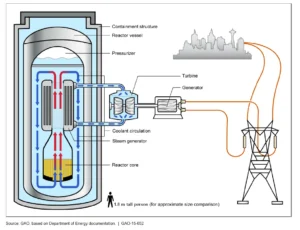
Around 16 sites across six states — Gujarat, Madhya Pradesh, Odisha, Andhra Pradesh, Jharkhand, and Chhattisgarh — have been identified for these projects. The SMRs will be built and operated under NPCIL’s supervision, with the public sector retaining operational control and ownership, while private firms receive beneficial rights over the generated electricity for captive use.
The private partners will fully finance the projects, including capital and lifecycle costs, and reimburse NPCIL for its role in project execution and decommissioning. In exchange, they will secure long-term, reliable power supply for their energy-intensive industrial operations.
SMRs – The Future of Compact Nuclear Power –
- Small Modular Reactors (SMRs), typically ranging from 30 MWe to 300 MWe per unit, are emerging as a promising solution to make nuclear power commercially competitive amid growing delays in large-scale nuclear projects worldwide.
- With roughly one-third the capacity of conventional reactors, SMRs can still generate substantial
low-carbon electricity, making them ideal for energy-intensive industries such as steel, aluminium, and cement.
- They also offer the flexibility to be installed at decommissioned thermal power plant sites, helping India reuse existing infrastructure while advancing its clean energy goals.
Global Momentum and Technological Interest –
- The global SMR ecosystem is steadily expanding, with two operational projects so far —
- Russia’s Akademik Lomonosov floating power unit (two 35 MWe modules, operational since May 2020) and
- China’s HTR-PM demonstration project, grid-connected in December 2021 and commercially operational by December 2023.
- Leading international players such as Holtec International (USA), Rolls-Royce SMR (UK), NuScale’s VOYGR SMR, Westinghouse Electric’s AP300, and GE-Hitachi’s BWRX-300 are actively developing and marketing SMR technologies.
Nuclear Power for the AI and Data Revolution –
- Globally, technology giants including Google and Microsoft are exploring nuclear power, including SMRs, to meet the massive and round-the-clock electricity demands of data centres driving the AI boom.
- While renewables remain their primary energy choice, intermittency issues—such as the lack of sunlight or wind—and insufficient grid-scale storage have limited scalability.
- SMRs, offering clean, reliable, and continuous power, could bridge this critical gap, complementing renewables in future power grids.
Commercial Viability and Ongoing Challenges –
- Despite their potential, SMRs remain largely unproven commercially, with high costs, complex regulatory hurdles, and public concerns over nuclear safety posing challenges to widespread adoption.
- Questions persist over whether these compact reactors can achieve economies of scale or attract sustained private investment.
- Yet, India’s recent policy shift—allowing private participation under NPCIL supervision in its proposed ‘Bharat Small Modular Reactor (BSMR)’ initiative—signals a significant step toward harnessing SMRs’ promise while cautiously managing associated risks.
India’s SMR Ambitions: A New Chapter in Nuclear Innovation –
- BSMR project marks India’s strategic move to enter the manufacturing and innovation value chain of small modular reactors (SMRs).
- India aims to leverage SMRs not only to advance its clean energy transition but also to position itself as a global technology leader, using nuclear innovation as a pillar of its foreign policy and industrial diplomacy.
- New Delhi envisions SMRs as a technology of promise capable of driving industrial decarbonisation while offering baseload power essential for grid
• Technological Limitations and the PHWR Challenge —
- Despite India’s proven capability in building small 220 MWe Pressurised Heavy Water Reactors (PHWRs), its existing reactor technology is increasingly seen as outdated.
- The PHWR design, based on natural uranium and heavy water, contrasts with the Pressurised Water Reactor (PWR) systems that now dominate global nuclear power.
- These PWRs, which use light water as both coolant and moderator, have become the international standard for efficiency, safety, and
- This technological gap underscores the need for India to upgrade its nuclear reactor designs to remain globally competitive and fully harness the promise of SMRs.
India’s SMR Technology Mix: Balancing Innovation and Self-Reliance –
- To address its technological limitations and align with global standards, India is developing a diverse mix of small modular reactor (SMR) designs under the Bhabha Atomic Research Centre (BARC).
- The lineup includes three prototypes — the Bharat Small Modular Reactor (BSMR, 200 MWe), the Bharat Small Reactor (BSR, 220 MWe), and a smaller SMR-55 (55 MWe)
- The BSR continues India’s legacy of Pressurised Heavy Water Reactor (PHWR)
- However, both the BSMR and SMR-55 are based on Pressurised Water Reactor (PWR) or light-water designs, aligning India’s nuclear technology with the global
• SMR in Union Budget 2025–26 —
- A major announcement in the Union Budget 2025–26 was the launch of a Nuclear Energy Mission dedicated to advancing R&D of SMRs.
- The government has earmarked ₹20,000 crore for this initiative, with the goal of developing and commissioning at least five indigenously designed SMRs by 2033.
PM-SETU Scheme
During the Kaushal Deekshant Samaroh which is being held at Vigyan Bhawan in New Delhi, the Prime Minister launched the Pradhan Mantri Skilling and Employability Transformation through Upgraded ITIs- PM – SETU.

About PM-SETU Scheme –
- Pradhan Mantri Skilling and Employability Transformation through Upgraded ITIs (PM- SETU) scheme is a centrally sponsored scheme with an investment of Rs 60,000 crore.
- The scheme aims to transform 1,000 Government ITIs across India into modern, industry- aligned training institutions.
- PM-SETU will follow a hub-and-spoke model, with 200 hub ITIs linked to 800 spoke
- Each hub will be equipped with advanced infrastructure, innovation and incubation centres, production units, training of trainer facilities, and placement services, while the spokes will extend access and outreach.
• The scheme will —
- Introduce new, demand-driven courses and revamp existing ones in collaboration with industry;
- Set up Special Purpose Vehicles (SPVs) with credible Anchor Industry Partners to manage clusters and ensure outcome-based training;
- Create pathways for long-term diplomas, short-term courses, and executive programs;
- Strengthen 5 National Skill Training Institutes in – Bhubaneswar (Odisha), Chennai (Tamil Nadu), Hyderabad (Telangana), Kanpur (Uttar Pradesh), Ludhiana (Punjab), as Centres of Excellence with global
- The initiative is backed by global co-financing from the World Bank and Asian Development Bank, with the first phase focusing on Patna and Darbhanga ITIs.
Phosphine
Recently, astronomers using the James Webb Space Telescope have detected phosphine (PH3) in the atmosphere of brown dwarf Wolf 1130C.

About Phosphine –
- It is a chemical compound made of one phosphorus atom and three hydrogen
- Formation — Phosphine on Earth is developed naturally by bacteria that live in very low- oxygen environments.
- To produce phosphine, Earth bacteria take up phosphate from minerals or biological material and add hydrogen.
- It is also found in the atmospheres of Jupiter and
- It is also called hydrogen
• Properties of Phosphine —
- It is a colourless, flammable, extremely toxic gas with a disagreeable garlic like
- Itis slightly soluble in
- It is formed by the action of a strong base or hot water on white phosphorus or by the reaction of water with calcium phosphide (Ca3P2).
- It is structurally similar to ammonia (NH3), but phosphine is a much poorer solvent than ammonia and is much less soluble in water.
- Uses of Phosphine — It is used in semiconductor and plastics industries, in the production of a flame retardant, and as a pesticide in stored grain.
Exercise KONKAN-25
Recently, Exercise KONKAN-25 commenced on 5th October, 2025, off the western coast of India.

About Exercise KONKAN-25 –
- It is a bilateral naval exercise between the Indian Navy and Royal Navy of
- The exercise will be conducted in two
- The harbour phase of the Exercise will include professional interactions between naval personnel, cross deck visits, sports fixtures, and cultural engagements.
- The sea phase will encompass complex maritime operational drills focusing on anti-air, anti- surface, and anti-submarine exercises, flying operations and other seamanship evolutions.
- Both participating nations will deploy frontline assets, including aircraft carriers, destroyers, frigates, submarines, and integral and shore based air assets.
- The Indian side will be represented by the carrier battle group of the indigenous aircraft carrier INS Vikrant in company with other surface, sub-surface and air combatants.
- This exercise is a reaffirmation of the shared commitment to ensuring secure, open and free seas and will exemplify the Comprehensive Strategic Partnership outlined in ‘India-UK Vision 2035’.
- Significance: Exercise Konkan 2025 will serve as a platform to consolidate strategic ties, enhance interoperability and contribute to regional maritime
INS Sahyadri
Recently, Indian Navy’s indigenous stealth frigate INS Sahyadri made a port call at Kemaman port in Malaysia.
About INS Sahyadri –
- It is the third ship of the Shivalik Class Guided Missile Stealth Frigates which was built by
Mazagon Dock Ltd in Mumbai.
- It is indigenously designed, constructed and commissioned in 2012.
• Features of INS Sahyadri —
- It is equipped with cutting-edge weapons and sensors, enabling her to identify and eliminate threats from the air, the surface, and the
- Capacity: It has a displacement capacity of 6,800 tons and has a massive surface speed of 32 knots.
- The vessel is a member of the Eastern Fleet of the Indian Navy, which is located in
- The ship is capable of carrying Barak-1 and Shtil-1 3S90M missiles, BrahMos anti-ship missiles, anti-submarine rocket launchers
- It is equipped with a versatile array of weapons and sensors, can carry multi-role helicopters and represent the ‘coming of age’ of India’s warship building
- Stealth Frigates under the Shivalik class series namely INS Shivalik, INS Sahyadri, and INS Satpura are the first stealth warships built in India (by Mazagon Dock Limited).
Chlorophytum vanapushpam
Researchers during a field exploration in Idukki district’s Vagamon hills have identified a new species of the genus Chlorophytum and named the new species as Chlorophytum vanapushpam.
About Chlorophytum vanapushpam –
- It is a perennial herb belonging to the genus Chlorophytum (family Asparagaceae).
• It is a close relative of the safed musli.
- It has been found in the rocky hills of Vagamon and Neymakkad – parts of the Western Ghats regions of Idukki district – at elevations between 700 m and 2124 m.
- The species name vanapushpam is a composite of ‘Vanam’ and ‘Pushpam,’ the Malayalam for forest and flower respectively.
• Features of Chlorophytum vanapushpam —
- It has white flowers in small clusters and slender leaves and grows up to 90 cm in
- But unlike its more famous cousin Chlorophytum borivilianum, Chlorophytum vanapushpam lacks tubers.
- Its seeds are about 4 to 5 mm across. Flowering and fruiting occurs from September to
- The Western Ghats region is thought to be a centre of origin of the genus
- A total of 18 species have been identified here so far, with many of them exhibiting medicinal
- One of these is the Chlorophytum borivilianum, more familiar to Indians as the ‘safed musli,’ a herb widely used in traditional medical preparations and also popular as a leaf
Coral Triangle
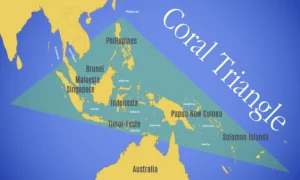
Philippines is preparing to host Southeast Asia’s first coral larvae cryobank which links research institutions in the Philippines, Taiwan, Indonesia, Malaysia, and Thailand to create a network of cryobanks across the Coral Triangle.
About Coral Triangle –
- It is often referred to as the ‘Amazon of the seas’, is a huge marine area spanning over 10 million square kilometres.
• Countries of coral Triangle: It includes countries like Indonesia, Malaysia, Papua New Guinea, Singapore, the Philippines, Timor-Leste, and the Solomon Islands.
- Significance — The Triangle is home to more than three-quarters of the world’s coral species, a third of all reef fish, the vast mangrove forests, and six of the seven marine turtle
- It also sustains the food security and livelihoods of more than 120 million
- Threats — Growing carbon emissions, destructive fishing, air, water, and soil pollution, and the accelerating effects of climate change are all driving coral bleaching, habitat loss, and species
What are Corals?
- Corals are essentially animals, which are sessile, meaning they permanently attach themselves to the ocean floor.
- Corals share a symbiotic relationship with single-celled algae called
- The algae provide the coral with food and nutrients, which they make through photosynthesis, using the sun’s light.
- They use their tiny tentacle-like hands to catch food from the water and sweep into their
- Each individual coral animal is known as a polyp and it lives in groups of hundreds to thousands of genetically identical polyps that form a ‘colony’.
Ortolan Bunting
The rare European bird, the Ortolan Bunting, with just a single recorded sighting in Bengal, was spotted at Baruipur, situated in the southern periphery of the city, recently.

About Ortolan Bunting –
- It is a small Palearctic migrant
- Scientific Name — Emberiza hortulana
- Distribution — The bird is found in most of Europe, with populations found as far west as Mongolia and as far north as the Arctic Circle.
• Habitat —
- Its habitat consists of open, cultivated, or uncultivated areas with sparse woody vegetation, up to an altitude of 2500 metres
- It absolutely avoids forested areas, including during
- The oceanic climate is not suitable for
• Features —
- The males have a greenish-gray head along with a yellow throat, swooping mustache, and ring around the eye.
- Its belly is brown and its back and rump are brown and
- The females and juveniles are smaller, have spots on the belly, and are duller
- Like most buntings, the ortolan has a conical beak that’s good for cracking
• Conservations Status —
- IUCN Red List: Least
Manjeera River
In a dramatic rescue operation near Edupayala temple in Medak, two youths from Kukatpally were saved after being swept away by the swollen Manjeera river.
About Manjeera River –
- The Manjeera also spelled Manjiira is a tributary of the river
- It passes through the states of Maharashtra, Karnataka and
- Course —
- It originates in the Balaghat range of hills near Ahmednagar District, Maharashtra, at an altitude of 823 metres (2,700 ft).
- The final stretch of the River forms the border between Maharashtra to the West and Telangana to the East.
- Ultimately, it drains into Godavari River at Basara near Nizamabad,
- Some of its notable tributaries are Haldi (Haridra), Lendi, Nalla, Manyad, Terna, Tawarja, Gharni,
- Key Projects on Manjeera —
- Singur Dam/Singur Reservoir
- Nizam Sagar
Tikhir Tribe
The Tikhir Tribal Council (TTC) recently submitted a representation to the Nagaland Director General of Police, urging the inclusion of aspirants from Tikhir tribe residing in Noklak district in the now-declared Nagaland Police constable recruitment.

About Tikhir Tribe –
- The Tikhir tribe is one of the indigenous Naga tribes found in the northeastern Indian state of
- According to the 2011 census, the population of the Tikhir people in Nagaland was 7,537.
• Some live across the border in Myanmar.
- They are listed as a Scheduled Tribe, in the official Census of
- They speak a language called Naga Yimchungru, which is part of the Tibeto-Burman language family, like most Naga languages.
- At one time, the Tikhir were headhunters and a man’s prestige depended upon the number of enemies he had killed.
- Tikhirs are an agricultural community whose livelihood depends on agricultural
- Since the Tikhir are a small tribe in Nagaland, some of the larger tribes harass
• Beliefs —
- With the coming of the Christian missionaries to Nagaland, most Tikhirs converted to
Christianity.
- Many of the Tikhir practice elements of folk religion with their
- “Tsonglaknyi” , the main Tikhir Festival, is observed from 9th to 12th Oct. every year. It is basically a festival of the sanctification of Shield.
Daily Current Affairs – 7 October 2025 MCQs
1. Consider the following statements regarding the revised Schedule M of the Drugs and Cosmetics Act –
- It introduces a comprehensive Pharmaceutical Quality System (PQS) and Quality Risk Management (QRM).
- The implementation deadline for all manufacturers, irrespective of their turnover, is December 31, 2025.
- The revised norms were notified in January 2024
How many of the statements given above are correct?
- Only one
- Only two
- All three
- None
Answer – B
Explanation – Schedule M defines the minimum standards for Good Manufacturing Practices (GMP) for pharmaceutical products in India under the Drugs and Cosmetics Act, 1940, and Rules, 1945, aligning with international standards. Revised norms — Notified in (Jan) 2024, the revised norms introduce a comprehensive Pharmaceutical Quality System (PQS), Quality Risk Management (QRM), and Product Quality Review (PQR). Key updates also cover mandatory
computerised storage systems, equipment and process validation, more specific rules for hazardous drug products, etc. It aims to improve product quality, safety, and international harmonisation, with phased implementation timelines based on manufacturer turnover. Implementation deadline — December 31, 2025.
2. Consider the following statements regarding the Sir Creek dispute between India and Pakistan –
- India’s claim is based on the Thalweg principle, which it argues is applicable as Sir Creek is a navigable waterway.
- Pakistan’s stance relies on a 1914 resolution that places the boundary on the eastern bank of the creek.
- The resolution of this dispute is crucial as it would have a direct impact on the demarcation of the continental shelf for both nations.
Which of the statements given above is/are correct?
- 1 only
- 1 and 2 only
- 2 and 3 only
- All of the above
Answer – B
Explanation – Sir Creek is a narrow, less than 100 km-long tidal estuary located between Gujarat’s Rann of Kutch (India) and Sindh (Pakistan). It forms the westernmost border between the two countries, but control over it remains unresolved due to conflicting interpretations of maritime boundaries. Colonial Roots of the Dispute — The origins of the dispute trace back to pre- Independence India, when the Maharaja of Kutch ruled the region. Differing interpretations of colonial-era maps and agreements led to overlapping territorial claims after Partition, sowing the seeds of the present conflict. India claims that the boundary should lie along the mid-channel of Sir Creek, effectively dividing the creek and adjacent marshlands equally. This claim is supported by a 1925 map and the Thalweg principle, which defines the border along the deepest navigable channel of a waterway. Pakistan, however, cites a 1914 resolution between the Rao of Kutch and the Sindh government, asserting that the eastern bank of the creek marks the boundary—giving it greater access toward Gujarat’s coastal region. Pakistan also disputes India’s reliance on the Thalweg principle, arguing that Sir Creek is non-navigable and hence exempt from that rule. An Unresolved Boundary — Despite multiple rounds of talks, the Sir Creek dispute remains unsettled, largely because resolving it would directly influence the maritime boundary and exclusive economic zone (EEZ) claims in the Arabian Sea.
3. Which of the following statement(s) is/are correct about the ‘small modular reactors’?
- They have a power capacity of up to 300 MW(e) per unit which is about one-third of the generating capacity of traditional nuclear power reactors.
- Unlike the traditional nuclear power plants, they can be factory-built.
- India has become the fifth country in the world to explore the development of small modular reactors.
Select the correct codes from below –
- 1 and 2 only
- 2 and 3 only
- 1 and 3 only
- All of the above
Answer – A
Explanation – SMRs are advanced nuclear reactors that have a power capacity of up to 300 MW(e) per unit, which is about one-third of the generating capacity of traditional nuclear power reactors. SMRs, which can produce a large amount of low-carbon electricity, are:
- Small – physically a fraction of the size of a conventional nuclear power
- Modular – making it possible for systems and components to be factory-assembled and transported as a unit to a location for
- Reactors – harnessing nuclear fission to generate heat to produce
There are about 50 SMR designs and concepts globally. Most of them are in various developmental stages and some are claimed as being near-term deployable. There are currently four SMRs in advanced stages of construction in Argentina, China and Russia, and several existing and newcomer nuclear energy countries are conducting SMR research and development.
4. Consider the following statements with reference to the Pradhan Mantri Skilling and Employability Transformation through Upgraded ITIs (PM-SETU) scheme –
- It is a centrally sponsored scheme with a total investment of ₹60,000 crore
- The scheme will transform 1,000 Government ITIs by adopting a hub-and-spoke model, where 200 hub ITIs will be linked to 800 spoke ITIs.
- The scheme aims to strengthen five National Skill Training Institutes as Centres of Excellence with global partnerships.
- The entire funding for the scheme is being provided by the Government of India, without any external co-financing.
Which of the statements given above are correct?
- 1 and 2 only
- 1, 2 and 3 only
- 2, 3 and 4 only
- All of the above
Answer – B
Explanation – Pradhan Mantri Skilling and Employability Transformation through Upgraded ITIs (PM-SETU) scheme is a centrally sponsored scheme with an investment of Rs 60,000 crore. The scheme aims to transform 1,000 Government ITIs across India into modern, industry-aligned training institutions. PM-SETU will follow a hub-and-spoke model, with 200 hub ITIs linked to 800 spoke ITIs. Each hub will be equipped with advanced infrastructure, innovation and incubation centres, production units, training of trainer facilities, and placement services, while the spokes will extend access and outreach. The scheme will — Introduce new, demand-driven courses and revamp existing ones in collaboration with industry; Set up Special Purpose Vehicles (SPVs) with credible Anchor Industry Partners to manage clusters and ensure outcome-based training; Create pathways for long-term diplomas, short-term courses, and executive programs; Strengthen 5 National Skill Training Institutes in – Bhubaneswar (Odisha), Chennai (Tamil Nadu), Hyderabad (Telangana), Kanpur (Uttar Pradesh), Ludhiana (Punjab), as Centres of Excellence with global partnerships. The initiative is backed by global co-financing from the World Bank and Asian Development Bank, with the first phase focusing on Patna and Darbhanga ITIs.
5. Regarding the bilateral naval exercise ‘KONKAN-25’ between India and the United Kingdom, consider the following statements –
- The exercise will be conducted in two phases: a harbour phase and a sea phase
- The Indian Navy will be represented by its carrier battle group led by INS Vikramaditya
- The sea phase includes complex operational drills focusing on anti-air, anti-surface, and anti- submarine warfare.
- The exercise is a reflection of the strategic partnership outlined in the ‘India-UK Roadmap 2030’.
Which of the statements given above is/are correct?
- 1 and 3 only
- 1, 2 and 4 only
- 1 and 4 only
- 1, 3 and 4 only
Answer – A
Explanation – It is a bilateral naval exercise between the Indian Navy and Royal Navy of UK. The exercise will be conducted in two phases. The harbour phase of the Exercise will include professional interactions between naval personnel, cross deck visits, sports fixtures, and cultural engagements. The sea phase will encompass complex maritime operational drills focusing on anti-air, anti-surface, and anti-submarine exercises, flying operations and other seamanship evolutions. Both participating nations will deploy frontline assets, including aircraft carriers, destroyers, frigates, submarines, and integral and shore based air assets. The Indian side will be represented by the carrier battle group of the indigenous aircraft carrier INS Vikrant in company with other surface, sub-surface and air combatants. This exercise is a reaffirmation of the shared commitment to ensuring secure, open and free seas and will exemplify the Comprehensive Strategic Partnership outlined in ‘India-UK Vision 2035’. Significance: Exercise Konkan 2025 will serve as a platform to consolidate strategic ties, enhance interoperability and contribute to regional maritime stability.
Source – The Hindu
Also Read : Daily Current Affairs – 6 October 2025