

Daily Current Affairs – 5 & 6 October 2025
Daily Current Affairs – 5 & 6 October 2025
Daily Current Affairs – 5 & 6 October 2025 : A Comprehensive Overview
Presumptive Taxation for Foreign Countries
NITI Aayog has proposed an optional presumptive taxation regime for foreign companies to reduce tax disputes, simplify compliance, and attract greater foreign direct investment into India.

Introduction –
- India has emerged as one of the most attractive investment destinations in the world, with cumulative foreign direct investment (FDI) inflows crossing USD 1 trillion between April 2000 and March 2025.
- However, persistent taxation disputes, particularly around Permanent Establishment (PE) rules and profit attribution, have been a recurring concern for multinational companies.
- To address these issues, NITI Aayog has proposed an optional presumptive taxation regime for foreign companies, aiming to reduce litigation, improve compliance, and encourage higher FDI inflows.
Understanding Presumptive Taxation –
- Presumptive taxation is a simplified tax regime where taxable income is calculated as a fixed percentage of gross revenue, rather than through detailed accounting.
- This mechanism reduces the compliance burden, avoids prolonged disputes, and provides certainty to businesses.
- India already uses presumptive taxation in limited sectors such as:
- Electronics manufacturing services: 25% of gross payments are deemed as
- Non-resident cruise operators: 20% of gross receipts deemed as
- NITI Aayog’s proposal seeks to extend this principle across sectors, particularly those involving digital services, technology, and offshore supply, where disputes are more common.
Key Features of NITI Aayog’s Proposal –
- The proposed presumptive tax system introduces several reforms designed to simplify taxation for foreign companies:
- Optional Participation — Foreign companies may choose between the presumptive regime and continue under the regular tax framework.
- Sector-Specific Rates — Profit attribution percentages would vary across industries, ranging between 5% and 30%. For example, in technology, 5% of offshore supply and 20% of onshore services could be deemed profitable.
- Safe Harbour Protection — Companies opting for presumptive taxation would not face litigation over the existence of a PE for those activities.
- Reduced Compliance Burden — Firms would not need to maintain exhaustive local books or undergo prolonged audits.
- Flexibility — Companies could revert to the regular regime if their actual profit is lower than the presumptive rate.
Rationale Behind the Proposal –
• Tackling PE and Profit Attribution Disputes —
- Determining whether a foreign company has a Permanent Establishment in India has often been subjective, especially in the digital Disputes on profit attribution can last 6-12 years, increasing costs for businesses. A presumptive taxation regime provides certainty and sidesteps prolonged litigation.
• Aligning with Global Practices —
- The proposal suggests codifying PE and profit attribution rules in domestic law while aligning them with OECD and UN tax models. This ensures India remains internationally competitive while protecting its source-based taxing rights.
• Enhancing FDI and Ease of Doing Business —
- By offering clarity, predictability, and a reduced compliance burden, the regime is expected to attract higher-quality FDI, particularly in digital and service-based industries.
Industry Reactions –
- Experts say that the scheme provides a clear path forward by eliminating ambiguities around PEs, reducing disputes, and lowering the costs of doing business.
- Also, sector-specific benchmarks allow businesses to plan operations efficiently, offering both clarity and reduced litigation risks.
Challenges in Implementation –
- Revenue Concerns — The government must ensure that the regime does not lead to significant revenue leakage.
- Sector-Specific Rates — Determining fair presumptive percentages for multiple industries will be complex.
- Centre–State Coordination — While direct taxes fall under the Centre, some coordination with states will be required.
- Data Privacy Issues — Safe harbour provisions may raise concerns about handling corporate financial data.
Way Forward –
- The NITI Aayog report recommends a multi-pronged approach, including —
- Expanding Advance Pricing Agreements (APA) and Mutual Agreement Procedures (MAPs) for quicker dispute resolution.
- Establishing a formal consultation framework with industry bodies before major tax
- Considering binding arbitration for international
- The Finance Ministry is expected to examine the proposal and may include it in future budgetary reforms, potentially constituting a working group to draft provisions and consult stakeholders.
Preventing Crowd Disasters
Recently, a tragic crowd crush at a political rally by actor and Tamilaga Vettri Kazhagam (TVK) founder Vijay in Tamil Nadu’s Karur district claimed 41 lives.
Following the incident, Chief Minister M.K. Stalin announced the formation of a one-member commission led by retired judge Aruna Jagadeesan to investigate the causes of the disaster.
The Chief Minister also stated that new regulations for managing public gatherings would be framed after the commission submits its report.
India’s Evolving Framework for Crowd Management –
- India has strengthened its crowd management mechanisms through updated national guidelines and institutional training.
- In June 2025, the Bureau of Police Research and Development (BPR&D) issued Comprehensive Guidelines on Crowd Control and Mass Gathering Management, focusing on scientific and preventive strategies for police and law enforcement agencies.
- Similarly, the National Disaster Management Authority (NDMA) continues to implement its 2020 framework, which recommends advance risk assessment, detailed site layouts, pre- defined entry and exit routes, real-time monitoring, and clear communication systems.
- The National Institute of Disaster Management (NIDM) has also introduced specialised training modules on managing large gatherings as part of its capacity-building initiatives.
- Following the February 2025 crowd crush at a New Delhi railway station, the Indian Railways updated safety manuals at around 60 major stations, adding provisions such as holding areas, dispersal zones, and crowd monitoring systems.
- However, these measures remain largely advisory rather than legally binding, leaving implementation inconsistent across states and agencies.
State-Level Measures for Crowd Management in India –
- Several States have begun enacting specific laws to manage large gatherings following recent crowd disasters.
- After the June 2025 stampede at Bengaluru’s M. Chinnaswamy Stadium, the Karnataka government introduced the Crowd Control (Managing Crowd at Events and Venues of Mass Gathering) Bill, 2025.
- This law covers political, cultural, and religious events, assigning accountability to organisers and empowering district magistrates to cancel or redirect events, regulate loudspeakers, and impose fines or imprisonment for violations.
- Similarly, Uttar Pradesh’s State Disaster Management Authority issued the Guidelines for Managing Crowd at Events of Mass Gathering, 2023, institutionalising measures for religious and cultural congregations.
• Institutional and Training Initiatives —
- The Gujarat Institute of Disaster Management has developed training materials offering technical guidance on calculating venue capacity, exit planning, volunteer coordination, and fire and first aid preparedness.
- Following a July 2025 stampede at Haridwar’s Mansa Devi temple, the Uttarakhand government mandated updated safety protocols at major temples and ordered the removal of encroachments near shrines to improve crowd movement and emergency access.
• Event-Specific and Local Protocols —
- The Maharashtra government introduced a Bill empowering the Nasik-Trimbakeshwar Kumbh Mela Authority to establish temporary townships and bypass certain urban planning norms to accommodate large gatherings.
- In addition, local enforcement agencies have circulated Standard Operating Procedures (SOPs) to improve inter-departmental coordination, medical preparedness, and fire safety.
- For instance, after the Bengaluru incident, Karnataka Police issued a detailed SOP for managing crowds at public events.
• Administrative Measures and Challenges —
- Across various districts, police authorities have directed organisers of major religious and political events to submit crowd management plans, limit attendance, set up barricades, deploy medical teams, and divert traffic.
- However, most of these directions remain administrative orders rather than statutory mandates, often issued reactively after specific tragedies — such as the Haridwar, Karur, Bengaluru, and Prayagraj incidents.
- The absence of uniform legal backing continues to hinder consistent enforcement of crowd safety protocols across States.
Scientific Approach to Crowd Control –
- Scientific crowd control focuses on regulating crowd density and movement patterns to prevent crushes and stampedes.
- Studies show that danger increases sharply when density exceeds five persons per square metre.
- To prevent this, organisers should avoid bottlenecks, slopes, and counter-flows, which create pressure buildups and destabilise movement.
- The use of drones and ground-linked computer systems for real-time density monitoring is considered a best practice — and failing to deploy such technologies is seen as a major safety
• Safety Practices for Individuals —
- In dense or moving crowds, individuals should move diagonally toward less crowded edges instead of pushing against the flow.
- Since most deaths result from compressive asphyxia rather than trampling, people are advised to keep forearms across the chest to protect breathing space and maintain balance with staggered footing.
- If knocked down, rolling to the side, shielding the head and neck, and standing up quickly can help avoid further injury.
- People should also stay away from rigid barriers like fences and walls where pressure can build dangerously, and avoid stopping to retrieve dropped items or take videos, as even short pauses can trigger turbulence in the crowd.
• Organisational Best Practices —
- Event organisers should ensure continuous monitoring by trained crowd managers, establish one-way movement routes, provide multiple exits, and display clear signage for crowd
- Public address systems must be used to relay safety instructions, and on-site medical facilities should be available for quick response to emergencies.
- Together, these measures form the scientific foundation of effective and safe crowd management at mass gatherings.
Electronics Component Manufacturing Scheme
Recently, the Union Minister of Electronics & IT highlighted that the Electronics Components Manufacturing Scheme has received an overwhelming response from both domestic and international industry leaders.

About Electronics Component Manufacturing Scheme –
- It is the first dedicated Production-Linked Incentive (PLI) scheme to promote the manufacturing of select passive electronic components, including resistors, capacitors, speakers, microphones, special ceramics, relays, switches, and connectors.
- Objective — To develop a robust component manufacturing ecosystem by attracting investments (global / domestic) across the value chain by integrating its domestic electronic industry with the Global Value Chains (GVCs).
- The scheme will offer three incentive structures —
- Turnover-linked incentive (based on revenue)
- Capex-linked incentive (for investments in plants & machinery)
- Hybrid incentive model (a combination of both)
- Incentives for incremental investments and turnover range from 1–10% depending on the year and the component.
- Employment generation will be a mandatory requirement for all applicants, including both component manufacturers and capital equipment producers. Thus, the scheme not only boosts manufacturing but also creates skilled jobs.
- Tenure — This scheme has a tenure of six years, with a one-year gestation
- The scheme focuses particularly on passive electronic components. In contrast, active components fall under the purview of the India Semiconductor Mission (ISM).
- This scheme is set to benefit a number of industries, such as automobiles, consumer electronics, and electronics.
Clean Slate Doctrine
The Delhi High Court recently confirmed the “clean slate” doctrine under the Insolvency and Bankruptcy Code (IBC) by holding that a successful resolution applicant cannot be burdened with the criminal liabilities of a corporate debtor’s past management.
About Clean Slate Doctrine under the Insolvency and Bankruptcy Code (IBC) –
- The Clean Slate Doctrine is a key legal principle embedded in the Insolvency and Bankruptcy Code, 2016 (“IBC”), which plays a pivotal role in the corporate insolvency process in India.
• The doctrine suggests that once a company successfully undergoes the insolvency resolution process and is taken over by a new buyer, the new owner should not be held accountable for any of the company’s pre-existing debts, penalties, or liabilities.
- This principle is designed to give the company a fresh start, essentially, a “clean slate” free from the baggage of its prior financial troubles.
- The Clean Slate Doctrine has been upheld in several landmark rulings by India’s Supreme Court (SC), reaffirming its crucial role in the IBC framework.
- In the Essar Steel India case, the SC emphasised that one of the primary objectives of the IBC is to streamline insolvency procedures in India and bring all claims under a unified system.
- The SC ruled that once a resolution plan is approved by the National Company Law Tribunal (NCLT), any and all previous liabilities, including debts and penalties, are
- The Clean Slate Doctrine has been upheld in several landmark rulings by India’s Supreme Court (SC), reaffirming its crucial role in the IBC framework.
• This means no party can initiate or continue any legal proceedings related to a claim that is not included in the approved resolution plan.
- In the Edelweiss Asset Reconstruction case, the SC held that government dues, such as taxes and duties, are extinguished if they are not part of the resolution plan.
- In the Surya Exim case, the Gujarat High Court, following the SC rulings, held that any tax demands issued after the NCLT’s approval of a resolution plan should be cancelled, reinforcing the idea that claims not included in the approved plan are no longer valid.
National Dam Safety Authority (NDSA)
After two years of political and administrative controversy over the structural ability of the barrages of the Kaleshwaram project, the government recently decided to repair the three barrages based on the suggestions of the National Dam Safety Authority (NDSA).
About National Dam Safety Authority (NDSA) –
- It is a statutory body set up by the Central Government under the Dam Safety Act,
- It operates with a clear mandate to regulate, oversee, and inspect
- It is headed by a chairman and assisted by five members to lead its five wings – policy and research, technical, regulation, disaster and resilience, and administration and finance.
- It has its headquarters at New
- Functions of the Authority include —
• implementing the policies formulated by the National Committee on Dam Safety;
• resolving issues between State Dam Safety Organisations (SDSOs), or between a
SDSO and any dam owner in that state;
- specifying regulations for inspection and investigation of dams;
- providing accreditation to agencies working on construction, design, and alteration of
- One of the standout features of the NDSA’s approach is its commitment to establishing and
enforcing comprehensive safety standards.
- These standards encompass various aspects, including structural integrity, environmental impact, and emergency response protocols.
- The NDSA actively engages in nationwide awareness programs to educate citizens about dam safety.
- In the face of natural calamities or unforeseen events, the NDSA ensures that comprehensive emergency response plans are in place.
NATO Pipeline System
Recently, Poland government said that it will finally join the NATO Pipeline System (NPS).

About NATO Pipeline System –
- It was set up during the Cold War to supply NATO forces with
- It is approximately 10,000 kilometres long, runs through 12 NATO countries and has a storage capacity of 4.1 million cubic metres.
- The NPS links together storage depots, military air bases, civil airports, pumping stations, truck and rail loading stations, refineries and entry/discharge points.
- Funding — Bulk distribution is carried out using facilities from the common-funded NATO Security Investment Programme.
- Controlled by — The networks are controlled by national organisations, with the exception of the Central Europe Pipeline System (CEPS), which is a multinational system managed by the CEPS Programme Office under the aegis of the NATO Support and Procurement Agency.
• Structure —
- It is overseen by the Petroleum Committee, which is the senior advisory body in NATO on consumer logistics and, more specifically, on petroleum issues.
- It reports to the Logistics Committee on all matters of concern to NATO in connection with
military fuels and other petroleum installations.
- The NPS consists of eight national pipeline systems and two multinational
Cassini spacecraft
A fresh look at data collected by NASA’s Cassini spacecraft has uncovered more evidence that Saturn’s moon Enceladus may be able to support life.
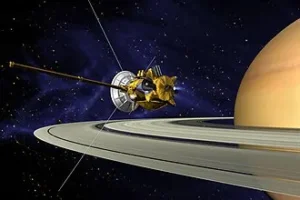
About Cassini spacecraft –
- It is a joint project of NASA, the European Space Agency and the Italian space agency (ASI).
- Cassini was a sophisticated robotic spacecraft sent to study Saturn and its complex system of rings and moons in unprecedented detail.
- It was launched on October 15, 1997.It was one of the largest interplanetary
- The mission consisted of NASA’s Cassini orbiter, which was the first space probe to orbit Saturn, and the ESA’s Huygens probe, which landed on Titan, Saturn’s largest moon
• Objectives of Cassini spacecraft —
- Saturn—Study cloud properties and atmospheric composition, winds and temperatures, internal structure and rotation, ionosphere, origin, and evolution
- Rings—Observe their structure and composition, dynamical processes, interrelation of rings and satellites, dust and micrometeoroid environment.
- Titan—Study abundances of atmospheric constituents, distribution of trace gases and aerosols, winds and temperatures, composition and state of the surface, and upper atmosphere
- Saturn’s Magnetosphere—Study its structure and electric currents; composition, sources, and sinks of particles within it; dynamics; interaction with the solar wind, satellites, and rings; Titan’s interaction with solar wind and magnetosphere
• Components of Cassini Spacecraft —
- The instruments on board Cassini included radar to map the cloud-covered surface of Titan and a magnetometer to study Saturn’s magnetic field.
- The disk-shaped Huygens probe was mounted on the side of Cassini and carried six instruments designed to study the atmosphere and surface of Titan.
Key Facts about Enceladus –
- It is named after a giant in ancient Greek mythology,
- It is one of the innermost moons of the ringed gas giant
- It has a diameter of 313 miles (504 km) and orbits Saturn at a distance of roughly 148,000 miles (238,000 km).
- Scientists believe Enceladus possesses the chemical ingredients needed for life and has hydrothermal vents releasing hot, mineral-rich water into its ocean, the same type of environment that may have spawned Earth’s first living organisms.
- Its ocean resides under a crust of ice about 12-19 miles (20-30 km)
Mono Ethylene Glycol (MEG)
The textile industry has appealed to the government not to levy anti-dumping duty on Mono Ethylene Glycol (MEG), which is one of the main raw materials used in the production of polyester fibre and filament.

About Mono Ethylene Glycol (MEG) –
- It is an organic compound with the formula C2H6O2.
- It is also called ethylene glycol or just
- It is a slightly viscous liquid with a clear, colourless appearance and a sweet taste that emits virtually no odour.
• It’s miscible with water, alcohol, and many other organic compounds.
- It is produced from the reaction between water and ethylene
- It is hygroscopic, meaning it can absorb water from its surroundings, and this property makes it useful as a dehydrating agent in various applications.
- MEG has a relatively low toxicity and is considered safe for many industrial and commercial
• Uses —
- MEG is most commonly used in the manufacture of polyester fibre, fabrics, and polyethylene terephthalate (PET) resin used for the production of plastic bottles.
- Other industrial uses are as a coolant, heat transfer agent, antifreeze, and hydrate inhibitor in gas pipelines.
Dark Stars
Astronomers recently unearthed evidence that some of the earliest luminous objects in the universe may be “dark stars”, stars powered not by nuclear fusion but by dark matter annihilation.

About Dark Stars –
- Dark stars are hypothetical objects that may have inhabited the early
- Scientists believe that dark stars might be the oldest stars in the history of the universe and may represent the first phase of stellar evolution.
- These stars are giant, much larger than our sun or any of the other stars around
- Dark stars aren’t actually dark; they just don’t emit any visible
- That’s because instead of nuclear fusion, which is the process that converts hydrogen into helium in the core of an ordinary star, dark stars are powered differently.
- Astronomers believe that dark matter heating is what powers
- Because there’s no fusion happening inside them, they aren’t very
• Because dark stars don’t rely on core fusion to stave off gravitational collapse, they’re not extremely compressed like normal stars.
- Instead, dark stars are likely giant, puffy clouds that shine extremely
- A single dark star from the early Universe could be as bright as an early galaxy containing many more standard stars.
- And even though they’d be massive — and potentially spewing gamma rays, neutrinos, and antimatter — so far, they’ve been too faint to be detected because they don’t emit visible
Compressive Asphyxia
The death toll in the stampede at Tamilaga Vetri Kazhagam’s (TVK) rally at Velusamypuram has climbed to 41, with doctors attributing most fatalities to compressive asphyxia due to crowd crush.
What is Asphyxia?
- Asphyxia or asphyxiation occurs when the body does not get enough
- Respiration is the process of air moving in and out of your
- Humans take in oxygen, which is circulated to all of the cells throughout the body via the blood, and carbon dioxide is then removed through the same system.
- When asphyxia occurs, and the body does not get the amount of oxygen it needs, it can
cause a person to become unconscious or even die.
About Compressive Asphyxia –
- This type of physical asphyxia happens when an outside force keeps you from expanding your chest to breathe.
• Your lungs are “crushed” and can’t take in air.
- This can happen from a crowd of people pressing against your body or a person’s weight on your chest.
CAQM
With the paddy harvest season beginning in northern India, the Commission for Air Quality Management in the National Capital Region and Adjoining Areas (CAQM) has stepped up measures to curb stubble burning, one of the key contributors to winter air pollution in the Capital.

About Commission for Air Quality Management in National Capital Region and Adjoining Areas (CAQM) –
- It is a statutory body established under the Commission for Air Quality Management in National Capital Region (NCR) and Adjoining Areas, Act 2021.
- Mandate — Better coordination, research, identification, and resolution of problems surrounding the air quality index and for matters connected therewith or incidental thereto.
- It undertakes action for the prevention and control of Air pollution in Delhi-NCR & Adjoining Areas which impacts the air quality of the National Capital Territory (NCT) of Delhi.
- The Commission is required to coordinate its actions on monitoring of air quality with the government of Delhi and the adjoining states, which includes Punjab, Haryana, Rajasthan, and Uttar Pradesh.
- Powers —
- Restricting activities influencing air
- Investigating and conducting research related to environmental pollution impacting air quality, preparing codes and guidelines to prevent and control air pollution.
- Issuing directions on matters including inspections, or regulations, which will be binding on the concerned person or authority.
- All the directions and orders by the Commission are of binding nature, and any person, officer, or authority shall be bound to comply with the same.
- The commission is directly accountable to the
- Composition —
- Chairperson: To be chaired by a government official of the rank of Secretary or Chief He will hold the post for three years or until s/he attains the age of 70 years.
- It will also have five ex-officio members who are either Chief Secretaries or Secretaries in charge of the department dealing with environment protection in the States of Delhi, Punjab, Haryana, Rajasthan, and Uttar Pradesh.
- Three full time technical
- Three members from non-government
• Technical members from the Central Pollution Control Board (CPCB), the Indian Space Research Organisation, and NITI Aayog.
Urban Flood Risk Management Programme
Recently, a high-level committee headed by the Union Home Minister approved the Urban Flood Risk Management Programme (UFRMP) Phase-2.
About Urban Flood Risk Management Programme –
- The programme will complement the states in mitigating the risk of urban flooding in the cities through uniform structural and non-structural intervention measures.
- Cities Involved (11 cities) — Bhopal, Bhubaneshwar, Guwahati, Jaipur, Kanpur, Patna, Raipur, Trivandrum, Vishakhapatnam, Indore and Lucknow.
- Selection Criteria — The 11 cities were selected on the basis of their status of being the most populous cities/state capitals, primarily prone to floods, as well as consideration of other physical, environmental, socio-economic and hydro-meteorological factors.
- Funding — The funding pattern will be on a cost-sharing basis between the Centre and the states according to the NDMF guidelines, i.e., 90 per cent from the Centre and 10 per cent from the states.
• Activities under Urban Flood Risk Management Programme —
- Structural measures includes Interlinking of water bodies to Stormwater Management, Construction of flood protection wall, Erosion Control and Soil Stabilisation using Nature- Based Solutions (NBS),etc.
- Non-structural measures such as Flood Early Warning System and Data Acquisition System and capacity building, etc.
International Social Security Association
Recently, the Union Labour Ministry has highlighted the expansion of social protection in the country from 19% in 2015 to over 64% in 2025 at a conclave of the International Social Security Association (ISSA) held in Kuala Lumpur.
About International Social Security Association –
- It was founded in 1927, under the auspices of the International Labour Organisation (ILO).
- It is the principal international organisation for social security organisations, governments and departments of social security.
- Objective: It promotes excellence in social security administration through professional guidelines, expert knowledge, services and support to enable its members to develop dynamic social security systems.
• Governance of International Social Security Association —
- General Assembly: It is actually the constituent assembly of the Association and is the highest statutory body. It consists of all members of the ISSA who are directly represented. It meets every three years.
- Council: It constitutes the electoral body of the Association, composed of the titular delegates of each country in which the ISSA has at least one affiliate member, with each of these countries having one titular delegate.
- Bureau: It constitutes the administrative authority of the Association, composed of the President of the ISSA, the Treasurer, the Secretary General, and elected members representing the different geographical regions of the world.
- Control Commission: It examines the financial records of the Association and the annual report and statements presented to the Bureau by the Treasurer, and verify that all financial transactions have been carried out in conformity with the Financial Regulations.
- India is a member country of this
- Headquarters: Geneva,
Dhvani Missile
India’s Defence Research and Development Organisation (DRDO) is on the verge of a historic breakthrough with the upcoming test of Dhvani, a cutting-edge hypersonic missile that promises to catapult the nation into an elite club of military superpowers.
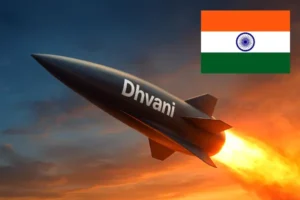
About Dhvani Missile –
- It is an hypersonic missile being developed by India’s Defence Research and Development Organisation (DRDO).
- The Dhvani is being developed as a Hypersonic Glide Vehicle (HGV), a revolutionary weapon system that combines blistering speed with unprecedented manoeuvrability.
- Unlike conventional cruise missiles that follow predictable flight paths, the Dhvani will be
launched to extreme altitudes before gliding toward its target at hypersonic speeds.
- This unique capability makes it nearly impossible to detect and even harder to intercept, rendering most existing missile defence systems obsolete.
- It will be capable of striking both land-based and maritime targets with pinpoint
- It can fly at speeds exceeding Mach 5 or 6, nearly 7,400 km per
- It has estimated ranges between 6,000 to 10,000
- What sets Dhvani apart is its sophisticated
- The missile features a blended wing-body configuration measuring approximately 9 meters in length and 2.5 meters in width.
- Its advanced heat protection system, utilising ultra-high-temperature ceramic composites, can withstand temperatures between 2,000-3,000°C generated during atmospheric reentry.
- The stealth-optimised geometry, including angled surfaces and smooth contours, dramatically reduces its radar cross-section, making it virtually invisible to enemy tracking
INS Sutlej
INS Sutlej recently arrived at Port Louis to undertake the 18th Joint Hydrographic Survey at Mauritius.
About INS Sutlej –
- It is a specialised hydrographic survey vessel of the Indian
- It was built by the Goa Shipyard Limited and commissioned into the Indian Navy in
- It is currently based at Kochi under the Southern Naval
- It is equipped with a range of surveying, navigational, and communication
- The next-generation surveying systems provided on board include the multi-beam swath echo sounding system, differential global positioning system, motion sensors, sea gravimeter, magnetometer oceanographic sensors, side scan sonars, and an automated data logging system.
- These are designed to meet the stringent international/ISO 9002 digital survey accuracy standards required for the production of electronic navigation charts and publications.
- The ship also carries a Chetak helicopter and four survey
Akshar Fast Patrol Vessel
Recently, Indian Coast Guard Ship (ICGS) Akshar was commissioned at Karaikal, Puducherry.
About Akshar Fast Patrol Vessel –
- It is the second in a series of eight Adamya-class Fast Patrol Vessels (FPVs).
- The name ‘Akshar’ meaning ‘imperishable’, symbolises the ICG’s steadfast resolve and commitment to ensuring safe, secure, and clean seas.
- It has been designed and built indigenously by Goa Shipyard Limited and contains over 60% indigenous content.
• Features of Akshar Fast Patrol Vessel —
- Capacity: The ship displaces approx. 320 tons and is propelled by two 3,000 KW diesel engines, enabling a maximum speed of 27 Knots.
- It has an endurance of 1,500 nautical miles at an economical
- ICGS Akshar is fitted with indigenously developed two Controllable Pitch Propellers (CPP) and gearboxes, offering superior maneuverability, operational flexibility and enhanced performance at sea.
- The vessel also features an Integrated Bridge System (IBS), Integrated Platform Management System (IPMS), and Automated Power Management System (APMS), augmenting operational efficiency and automation.
- The ship will be based at Karaikal, Puducherry, under the administrative and operational control of Commander Coast Guard Region (East).
Mar del Plata Canyon
A groundbreaking expedition to Argentina’s Mar del Plata Canyon uncovered over 40 potential new deep-sea species, including glass squids and pink lobsters.
About Mar del Plata Canyon –
• It is located at the continental margin off the coast of Buenos Aires Province, Argentina.
- It lies about 250-300 km offshore from the city of Mar del
• It is one of Argentina’s largest submarine canyons.
- The area is characterised by fine sand with a mixture of terrigenous material and planktonic foraminifera substrate.
• It is highly productive and influenced by the permanent Argentine Shelf-break Front.
- This front marks the boundary where subantarctic shelf waters meet the cooler, more
saline waters of the Falkland-Malvinas Current, creating a significant thermohaline front.
What are Submarine Canyons?
- A submarine canyon is any of a class of narrow, steep-sided valleys that cut into continental slopes and continental rises of the oceans.
- Submarine canyons originate either within continental slopes or on a continental
- They are rare on continental margins that have extremely steep continental slopes or
- Most submarine canyons extend only about 48 km (30 miles) or less in length, but a few are more than 320 km (200 miles) long.
- They usually are many kilometres in width; for instance, the Grand Bahama Canyon measures 37 km (23 miles) at its widest point.
- Submarine canyons are so called because they resemble canyons made by rivers on
- A relatively large number of submarine canyons are located directly offshore of river canyons of adjacent land areas and may have once been connected to extensions of the
- In most cases, however, the characteristics of the submarine variety and those of the nearby land canyons are quite distinct.
- The submarine canyons, for example, tend to have steeper side slopes, much higher gradients, and considerably narrower floors.
- Like rivers on land, these underwater features act as the primary conduits for sediments (and associated nutrients and organic carbon) transported from the continental shelf to the deep ocean basins.
- Here the sediment is deposited, forming enormous sediment accumulations, called submarine fans, that resemble river deltas.
Baratang Island
Recently, India’s only mud volcano at Baratang in Andaman and Nicobar Islands has again erupted.
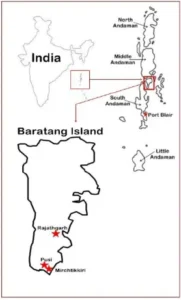
About Baratang Island –
- Location — It is located in the North and Middle Andaman district, and it is nearly 150 km away from Port Blair.
- It is a very popular tourist spot because it is India’s only mud volcano.
- It was erupted recently in 2005 owing to the oceanic seismic
- The mud volcanoes in Baratang Islands are the only known volcanoes in the Indian sub-
- It is also home to the Jarawa tribe, one of the indigenous tribes of the Andaman and Nicobar
What is Mud Volcano?
- Mud volcanoes, also called ‘Mud Domes,’ are formed by the eruption of mud slurries, water, and gases involving a series of geological processes.
- Unlike actual ingenious volcanoes, mud volcanoes don’t throw out lava when they
- It is a geological formation where a mixture of mud, water, and gases (mainly methane, sometimes carbon dioxide or nitrogen) erupts to the surface, creating cone-like structures that resemble true volcanoes without molten lava.
- The sizes of mud volcanoes lie between one and two meters to 700 meters high and between one and two meters to 10 kilometers wide.
- Mud volcanoes also exist on the floor of the sea and can form islands and banks that alter the topography and shape of the coastline.
Daily Current Affairs – 5 & 6 October 2025 MCQs
1. Consider the following statements regarding Presumptive Taxation in India –
- It calculates taxable income as a fixed percentage of the gross revenue.
- It is currently applicable to sectors like electronics manufacturing services and non-resident cruise operators.
- NITI Aayog has proposed its extension to sectors involving digital services and technology.
Which of the statements given above is/are correct?
- 1 only
- 1 and 2 only
- 2 and 3 only
- All of the above
Answer – D
Explanation – Presumptive taxation is a simplified tax regime where taxable income is calculated as a fixed percentage of gross revenue, rather than through detailed accounting. This mechanism reduces the compliance burden, avoids prolonged disputes, and provides certainty to businesses. India already uses presumptive taxation in limited sectors such as: Electronics manufacturing services: 25% of gross payments are deemed as profit. Non-resident cruise operators: 20% of gross receipts deemed as profit. NITI Aayog’s proposal seeks to extend this principle across sectors, particularly those involving digital services, technology, and offshore supply, where disputes are more common.
2. Consider the following statements regarding the Production-Linked Incentive (PLI) scheme for electronic components –
- It is the first PLI scheme dedicated to the manufacturing of passive electronic components.
- The scheme offers incentives linked to investment in plant and machinery, but not to turnover.
- Employment generation is a mandatory requirement for the beneficiaries of the scheme.
- The manufacturing of active components like semiconductors is also covered under this scheme.
How many of the statements given above are correct?
- Only one
- Only two
- Only three
- All four
Answer – B
Explanation – It is the first dedicated Production-Linked Incentive (PLI) scheme to promote the manufacturing of select passive electronic components, including resistors, capacitors, speakers, microphones, special ceramics, relays, switches, and connectors. Objective — To develop a robust component manufacturing ecosystem by attracting investments (global / domestic) across the value chain by integrating its domestic electronic industry with the Global Value Chains (GVCs). The scheme will offer three incentive structures — Turnover-linked incentive (based on revenue) Capex-linked incentive (for investments in plants & machinery) Hybrid incentive model (a combination of both) Incentives for incremental investments and turnover range from 1–10% depending on the year and the component. Employment generation will be a mandatory requirement for all applicants, including both component manufacturers and capital equipment producers. Thus, the scheme not only boosts manufacturing but also creates skilled jobs. Tenure
— This scheme has a tenure of six years, with a one-year gestation period. The scheme focuses particularly on passive electronic components. In contrast, active components fall under the purview of the India Semiconductor Mission (ISM). This scheme is set to benefit a number of industries, such as automobiles, consumer electronics, and electronics.
3. Consider the following statements regarding the ‘Clean Slate Doctrine’ under the Insolvency and Bankruptcy Code, 2016 (IBC) –
- It ensures that the new owner of a company is not liable for any pre-existing debts or penalties after a successful resolution process.
- The Supreme Court of India has ruled that government dues like taxes are extinguished if not part of the approved resolution plan.
- The doctrine allows for legal proceedings to continue for claims that are not included in the resolution plan if they are of a criminal nature.
Which of the statements given above is/are correct?
- 1 only
- 1 and 2 only
- 2 and 3 only
- All of the above
Answer – B
Explanation – The Clean Slate Doctrine is a key legal principle embedded in the Insolvency and Bankruptcy Code, 2016 (“IBC”), which plays a pivotal role in the corporate insolvency process in India. The doctrine suggests that once a company successfully undergoes the insolvency resolution process and is taken over by a new buyer, the new owner should not be held accountable for any of the company’s pre-existing debts, penalties, or liabilities. This principle is designed to give the company a fresh start, essentially, a “clean slate” free from the baggage of its prior financial troubles. The Clean Slate Doctrine has been upheld in several landmark rulings by India’s Supreme Court (SC), reaffirming its crucial role in the IBC framework. In the Essar Steel India case, the SC emphasised that one of the primary objectives of the IBC is to streamline insolvency procedures in India and bring all claims under a unified system. The SC ruled that once a resolution plan is approved by the National Company Law Tribunal (NCLT), any and all previous liabilities, including debts and penalties, are extinguished. This means no party can initiate or continue any legal proceedings related to a claim that is not included in the approved resolution plan. In the Edelweiss Asset Reconstruction case, the SC held that government dues, such as taxes and duties, are extinguished if they are not part of the resolution plan. In the Surya Exim case, the Gujarat High Court, following the SC rulings, held that any tax demands issued after the NCLT’s approval of a resolution plan should be cancelled, reinforcing the idea that claims not included in the approved plan are no longer valid.
4. Which of the following statement(s) is/are incorrect about the ‘Cassini Mission’?
- Launched in 2016, it is a cooperation mission between NASA and Japanese Space Agency to study the atmosphere of planet Saturn.
- Huygens is a lander which landed on Titan in 2005 i.e. one of the moons of Saturn.
- Cassini Mission is the first space probe to visit Saturn
Select the correct codes from below –
- 1 and 2 only
- 3 only
- 1 and 3 only
- None of the above
Answer – C
Explanation – Launched in 1997, the Cassini mission is a cooperation mission between NASA, the European Space Agency and the Italian Space Agency. The spacecraft was launched on October 15, 1997. This was the first landing ever accomplished in the outer Solar System. Cassini–Huygens is an unmanned spacecraft sent to the planet Saturn. Cassini is the fourth space probe to visit Saturn and the first to enter orbit. Its design includes a Saturn orbiter and a lander for the moon Titan. The lander, called Huygens, landed on Titan in 2005.
5. Which of the following statement(s) is/are correct about the ‘Commission for Air Quality Management’?
- It is a Commission at the Central level which has superseded all the Central Bodies such as the NGT, Central Pollution Control Board etc. in terms of management of air pollution in the NCR region.
- With its formation, the Supreme Court monitored Environment Pollution (Prevention and Control) Authority which was established in the year 2018 has been disbanded.
- The decisions of the new Commission will not be heard by any courts in the NCR region except the Supreme Court of India.
Select the correct codes from below –
- 1 only
- 1 and 2 only
- 2 and 3 only
- None of the above
Answer – B
Explanation – The Commission for Air Quality Management in the National Capital Region and Adjoining Areas Bill, 2021, was introduced by the government in the Parliament and passed by both Houses. It has replaced the
The monitoring and management of air quality in the Delhi-NCR region has been done in pieces by multiple bodies, including the Central Pollution Control Board (CPCB), the state pollution control boards, the state governments in the region, including Delhi, Haryana, Uttar Pradesh, and Rajasthan, and the Environment Pollution (Prevention and Control) Authority (EPCA) of the National Capital Region. They, in turn, are monitored by the Union Ministry of Environment and Forests and Climate Change (MoEF), and the Supreme Court which monitors air pollution as per the judgment in ‘M C Mehta vs Union of India’ case in 1988.
The Bill, however, seeks to create an overarching body to consolidate all monitoring bodies, and to bring them on one platform so that air quality management can be carried out in a more comprehensive, efficient, and time-bound manner. The Centre also seeks to relieve the Supreme Court from having to constantly monitor pollution levels through various cases.
Apart from consolidating all agencies that monitored, investigated and planned mitigation of air
pollution in the region, the commission has replaced the Supreme Court-appointed Environment Pollution (Prevention and Control) Authority (EPCA) which had been running for 22 years
Source – The Hindu
Also Read :
Daily Current Affairs – 4 October 2025
DSSSB TGT Teacher Recruitment 2025